
peppol acces point
Connect your B2B exchanges to the Peppol network
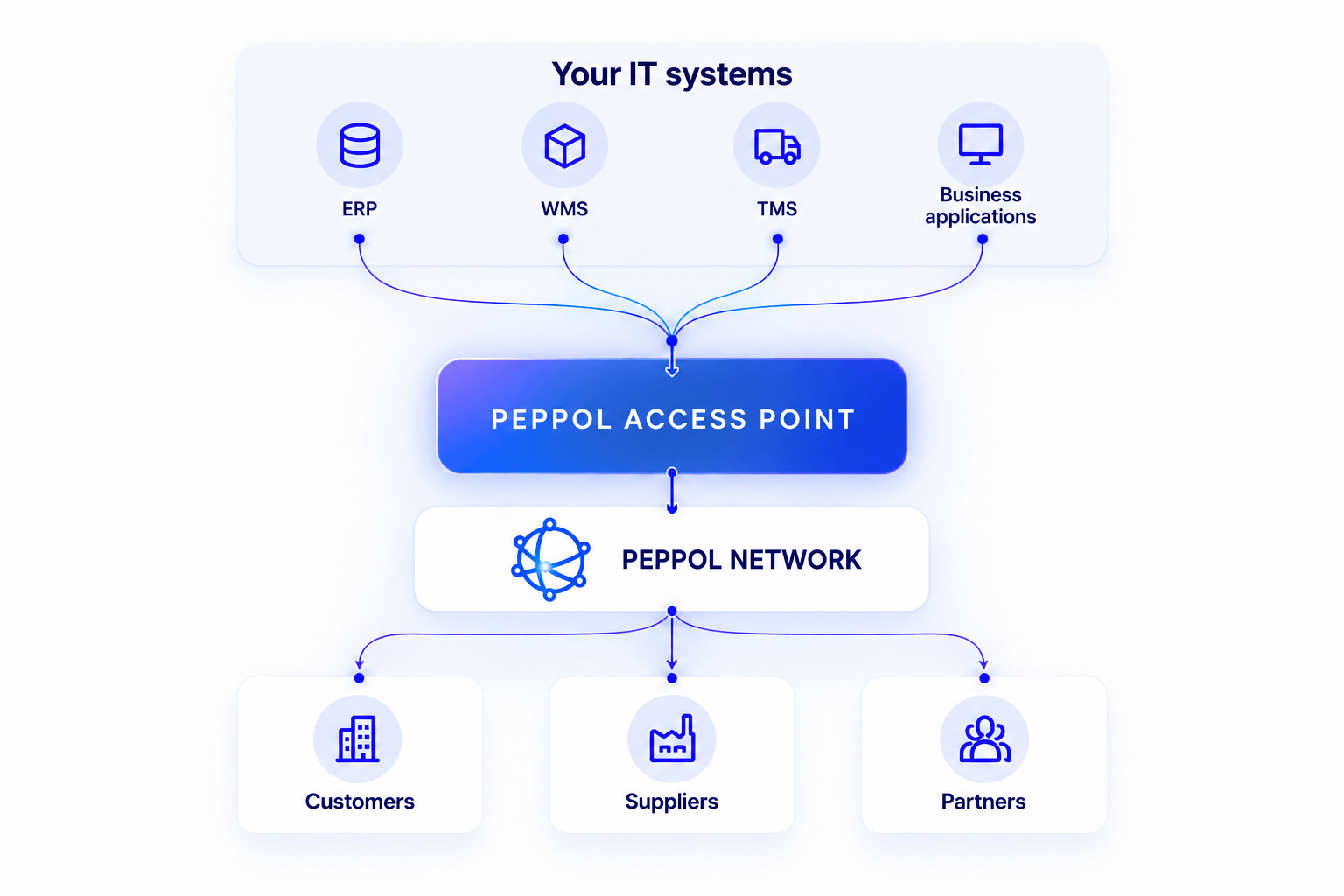
Use Weexa’s Peppol Access Point to connect your systems and exchange B2B documents with your business ecosystem through a standardised and secure network.
Peppol: a network connecting your B2B ecosystem
Peppol facilitates electronic exchanges between businesses and organisations through a standardised, interoperable network.
Beyond e-invoicing, Peppol supports a broader approach to B2B connectivity, helping businesses simplify exchanges with customers, suppliers and partners while integrating with their existing systems and processes.
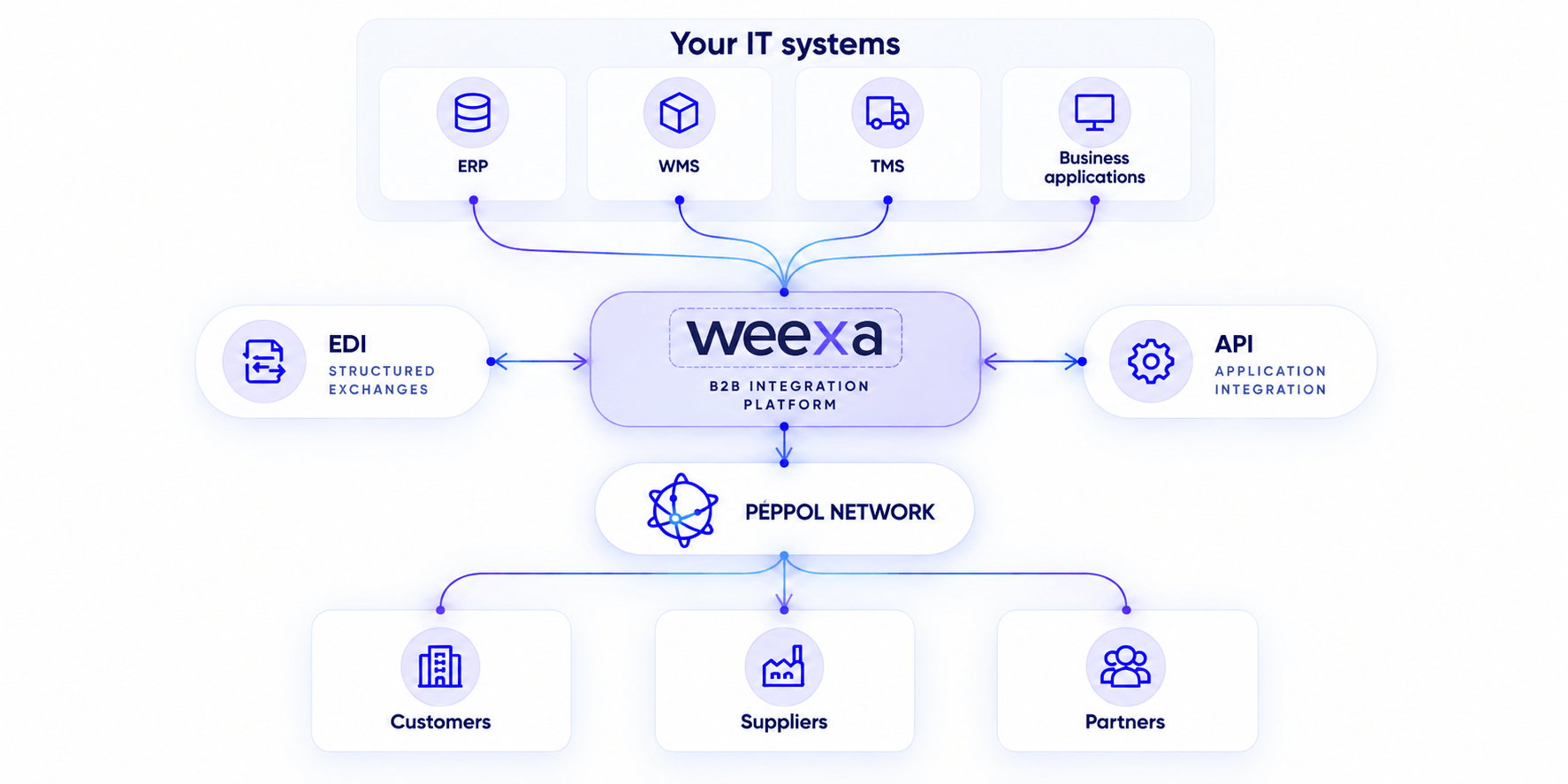
With its own Peppol Access Point, Weexa enables you to connect your IT systems to the Peppol network and integrate it into your EDI/B2B environment.

Your gateway to the Peppol network

Peppol Connectivity
Connect your organisation and business ecosystem to the network.

IT Systems Integration
Connect with your ERP, business applications and B2B environments.

Exchange Management
Automate and monitor exchanges across your business processes.

Weexa Expertise & Support
Benefit from integration expertise and support when deploying your data flows.
One Access Point. Two Models.
For your business
Connect your own systems and B2B exchanges to the Peppol network.

For your customers
Leverage Weexa's Peppol infrastructure to enhance your own offering and provide Peppol services to your business ecosystem.
Peppoly fits into your EDI/B2B strateg
Peppol does not necessarily replace your existing EDI exchanges. Instead, it provides an additional communication channel within your B2B architecture.

Peppol supporting your B2B exchanges

Expand your B2B Connectivity
Connect new partners through a standardised network.
Complement your EDI Environment
Integrate Peppol alongside your existing exchange channels.
Support your E-Invoicing Requirements
Use Peppol where it plays a role in electronic invoicing exchanges.

Develop a Peppol Offering
Leverage Weexa's Access Point to provide new services to your own customers.

FAQ
Your questions answered
Find answers to frequently asked questions about our Peppol solution.
What is Peppol?
Peppol is an international network that enables businesses and organisations to exchange electronic documents using common standards. It facilitates interoperability between different systems and trading partners.
What is a Peppol Access Point?
A Peppol Access Point enables an organisation to connect to the network to send and receive electronic documents with other participants, without having to establish a separate connection with each one.
Is Peppol only used for e-invoicing?
No. Although Peppol is widely used for exchanging electronic invoices, its scope extends to B2B document exchanges more broadly. It can therefore complement an overall strategy for digitising and automating business data flows.
What is the difference between Peppol and EDI?
EDI refers to the technologies and processes used to automate the exchange of structured data between trading partners. Peppol provides a standardised network and interoperability framework for certain types of exchanges. Both approaches can therefore coexist within the same B2B architecture.
Can Peppol be integrated into an existing EDI environment?
Yes. Peppol can be integrated into an existing EDI/B2B architecture to add another exchange channel while retaining the connections and processes already in place.
How can we connect our IT systems to the Peppol network?
Weexa supports the integration of its Peppol Access Point with your IT environment and business applications, enabling you to incorporate Peppol exchanges into your existing B2B processes.
Does Weexa have its own Peppol Access Point?
Yes. Weexa operates its own Peppol Access Point, enabling businesses to connect to the network. This infrastructure can also provide the foundation for partners looking to integrate Peppol into their own service offerings.
Vous découvrez la gestion des factures clients
Consultez nos ressources pour mieux comprendre la dématérialisation, l’automatisation et les enjeux liés au traitement des factures fournisseurs.
Comment automatiser le traitement des factures clients ?
Découvrez les principales étapes pour réduire les tâches manuelles et fluidifier vos processus.
Facture électronique vs PDF : quelles différences ?
Comprenez pourquoi une facture électronique ne se limite pas à un PDF et découvrez les formats.
Comment réussir un projet de mise en conformité ?
Découvrez les étapes clés et les bonnes pratiques pour vous préparer à la facturation électronique.