iPaaS: ORCHESTRATION & AUTOMATION
iPaaS solution: centralise and orchestrate all your integrations
Weexa’s iPaaS platform brings together your EDI flows, APIs, business applications and cloud services to automate processes, monitor exchanges and simplify your IT environment.
Why adopt an iPaaS platform?
As applications, partners and data flows multiply, businesses face increasingly complex architectures. ERP, CRM, SaaS tools, e-commerce platforms, APIs and EDI flows now all need to work together smoothly and securely.
An iPaaS platform centralises these integrations, automates business processes and gives you complete visibility across your IT environment.

Centralise your integrations
Bring all your applications, APIs and data flows together on a single platform.
Automate your workflows
Eliminate repetitive tasks and automate your business processes end to end.

Monitor your flows
Track the status of your exchanges in real time with dashboards and smart alerts.

Accelerate your projects
Reduce the time needed to deploy new integrations and applications.

Gain agility
Add new applications, partners or connectors with ease.

Simplify collaboration
Give IT and business teams a shared view of processes and data.
Discover Weexa’s iPaaS platform
iXPath is an iPaaS platform designed to centralise your integrations, orchestrate business processes and monitor all your data flows from a single interface. Flexible, scalable and secure, it has helped businesses accelerate digital transformation for more than 10 years.
API Manager
Expose, secure and manage your APIs from a single interface, making it easier for your applications to communicate.
Connectors
Quickly connect your ERP, CRM, cloud applications, trading partners and third-party platforms using an extensive connector library.
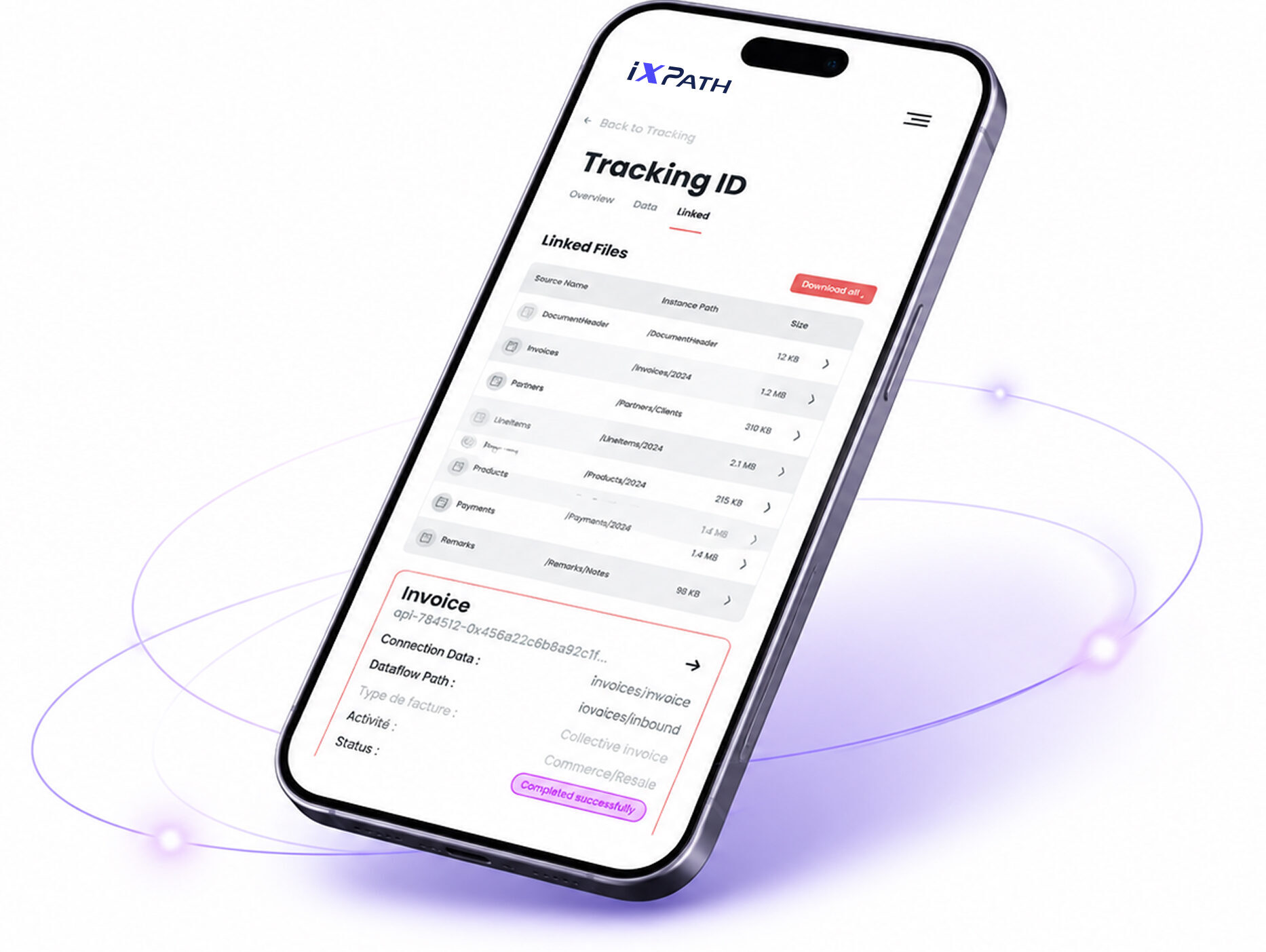
A platform that
orchestrates
your entire IT environment
ERP, CRM, cloud applications, APIs, EDI flows, partners, e-commerce platforms and BI tools: iXPath centralises and manages all your exchanges to ensure maximum interoperability between your systems.
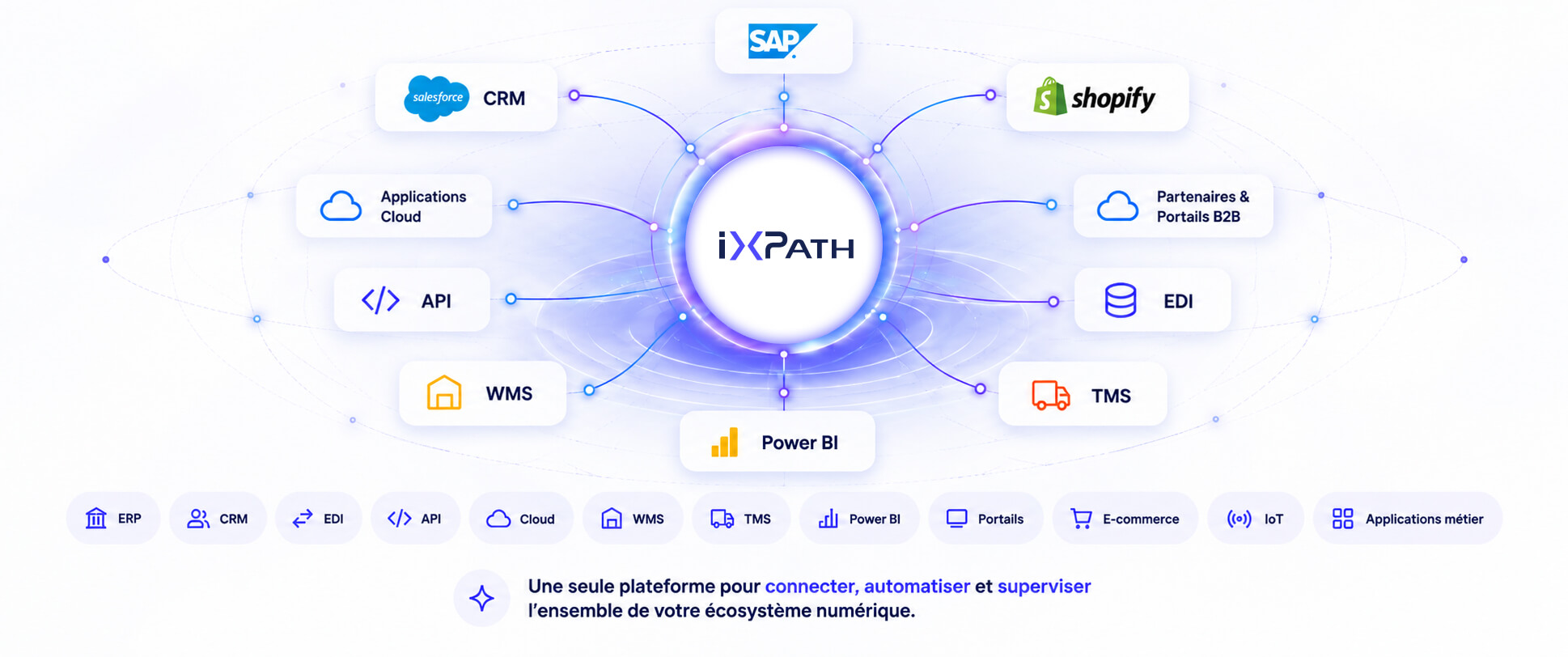
Automate your business processes end to end
From purchasing through to cash collection, including e-invoicing and collaboration with your partners, iXPath lets you model, automate and monitor your business processes in a single environment.
One agile, secure platform
Built to meet the demands of the most ambitious businesses, iXPath combines an iPaaS platform, a data flow processing engine and a low-code environment in a single, scalable, highly available solution.
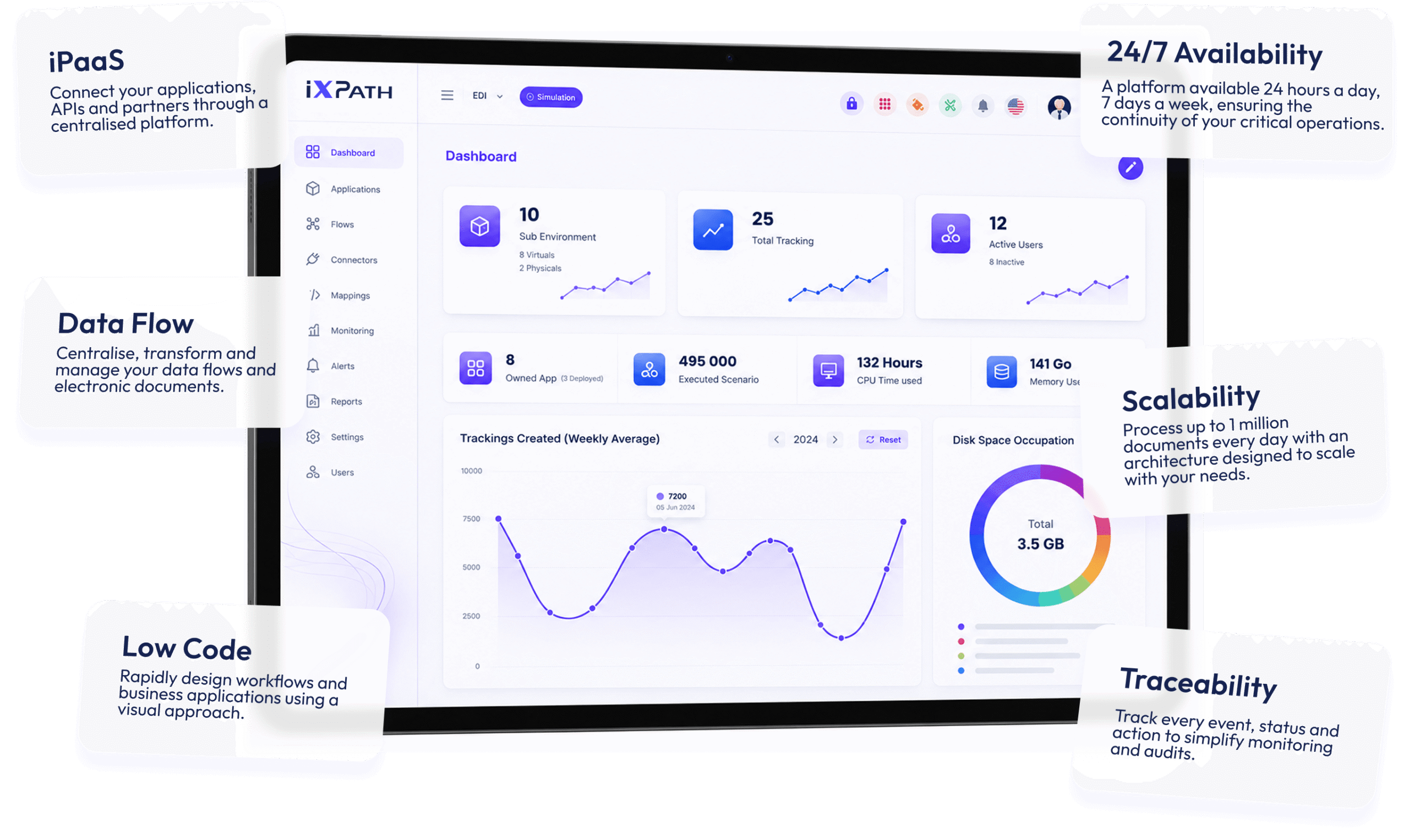
A platform built for every environment
iXPath connects with your applications, partners and existing systems for fast, seamless integration.
Over 200 ready-to-use connectors
iXPath integrates with all your business applications and platforms to centralise and automate your data flows.
Connect your systems using the leading protocols
Communicate with your partners and applications through broad support for industry-standard exchange protocols.
Manage all your business documents
Automate the exchange and transformation of key documents used in your B2B transactions.
Automate your business processes
Orchestration, validation, transformation and monitoring: digitise your processes from end to end.
Solutions tailored to your industry
Our teams tailor each project to the processes and challenges specific to your business.
FAQ
Your questions answered
Find answers to frequently asked questions about our iPaaS solution.
What is an iPaaS solution?
An iPaaS (Integration Platform as a Service) is a platform that connects applications, systems and data within a single environment. It makes it easier to build, automate and monitor data flows between the different components of an IT environment.
What is an iPaaS platform used for in business?
An iPaaS platform connects ERP, CRM, WMS and TMS systems, cloud applications, APIs and partner systems. It centralises integrations and automates data exchange, reducing bespoke development and application silos.
What are the benefits of an iPaaS?
An iPaaS simplifies integration management, speeds up the deployment of new data flows and makes them easier to adapt over time. It also gives you greater visibility of your exchanges through monitoring, control and error-handling features.
What is the difference between iPaaS, API management and EDI?
An iPaaS orchestrates integrations between different applications and data sources. API management focuses mainly on managing, securing and monitoring APIs, while EDI handles structured B2B exchanges between businesses. These technologies are complementary and can be combined within a single integration architecture.
Can an iPaaS connect cloud applications and on-premise systems?
Yes. An iPaaS can connect cloud environments, SaaS applications and systems hosted on your own infrastructure, allowing you to build hybrid architectures that fit your existing IT environment.
How does an iPaaS automate data flows?
An iPaaS lets you create workflows that automatically retrieve, transform, validate and transmit data between multiple systems. Flows can be triggered by an event, an API call, a file or rules defined around your business processes.
Why choose Weexa for your iPaaS project?
With iXPath, Weexa combines its long-standing expertise in B2B exchanges with its skills in application integration, APIs and data flow automation. This approach connects internal and external environments and integrates the iPaaS into your existing ecosystem, rather than leaving it as an isolated solution.

Vous découvrez l'API ?
Consultez notre guide et ressources pour mieux comprendre l’API et réussir vos projets d’intégration.
Qu'est ce qu'une API ?
Découvrez le fonctionnement, les bénéfices et les cas d’usage de l’EDI pour les entreprises.
EDI vs API : quelles différences ?
Comprenez les différences entre EDI et API pour choisir la bonne solution pour vos flux B2B.
Comment réussir un projet d’intégration API ?
Les étapes clés, les bonnes pratiques et nos conseils pour un projet EDI réussi.
Ready to simplify and connect your IT environment?
Our experts will help you implement an iPaaS platform tailored to your requirements.